Goldsbrough & Mort
Established Eighteen Forty-Three
Goldsbrough Mort monogram
A holding company for Mort Family Interests

Stewards
of capital,
enterprise
& family —
since 1843.

Goldsbrough Mort traces its lineage to the colonial wool houses of nineteenth-century Australia. Today it operates as the holding entity for the Mort family — quiet, long-horizon, deliberate.

182
Years of continuity
VI
Generations stewarded
Mort & Co. — Sydney 1843 R. Goldsbrough & Co. — Melbourne 1847 Goldsbrough, Mort & Co. — 1888 Elder Smith Goldsbrough Mort — 1962 Elders IXL — 1981 Mort & Co. — Sydney 1843 R. Goldsbrough & Co. — Melbourne 1847 Goldsbrough, Mort & Co. — 1888 Elder Smith Goldsbrough Mort — 1962 Elders IXL — 1981

A lineage,
drawn long.

From two colonial wool houses to one of Australia's most enduring commercial bloodlines. Each merger added a name; the discipline carried through.

1843

Mort & Co. is founded.

Thomas Sutcliffe Mort opens an auctioneering and brokerage business in Sydney, trading principally in wool — the colony's defining staple.

1847

Goldsbrough establishes in Melbourne.

Richard Goldsbrough founds his own wool-broking enterprise in the south, building a reputation across Victoria's burgeoning pastoral districts.

1888

The houses combine.

R. Goldsbrough & Co. and Mort & Co. merge to form Goldsbrough, Mort & Co. — a continent-spanning name in wool, finance, and pastoral interests.

1962

Union with Elder Smith.

The firm joins Elder Smith & Co. to become Elder Smith Goldsbrough Mort & Co. Ltd, consolidating the country's storied agricultural agencies under one banner.

1981

Elders IXL is formed.

Merger with Henry Jones IXL creates Elders IXL — today trading as Elders Limited, one of Australia's oldest listed agribusinesses.

Today

Goldsbrough Mort Pty Ltd.

The name is preserved in private form, now serving as the holding company for the Mort family's commercial, philanthropic and personal interests.

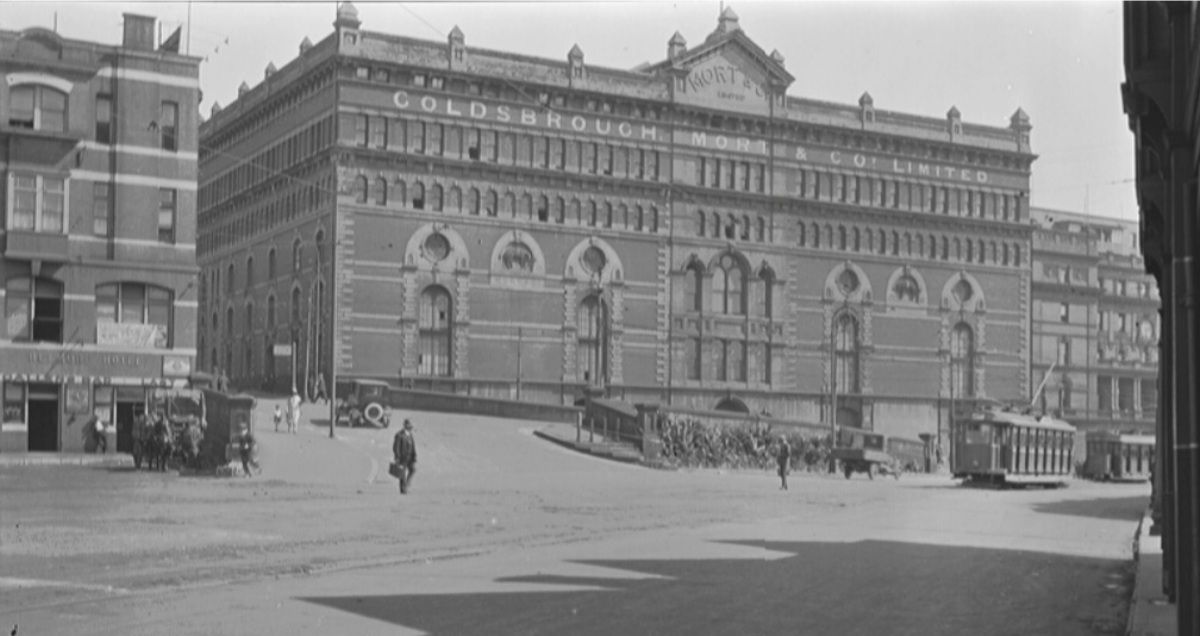
Goldsbrough, Mort & Co. Limited building, Sydney
A house in stone

Goldsbrough, Mort & Co. Limited
— Bridge Street, Sydney.

Wool stores & principal offices
photographed circa nineteen-twenty

The man whose
name endures.

Of the two founders, it is Thomas Sutcliffe Mort whose enterprise the family carries forward. Wool broker, dock-builder, refrigeration pioneer, dairy industrialist, philanthropist — the breadth of his career was already legendary in his own lifetime. His is the throughline of nearly two centuries.

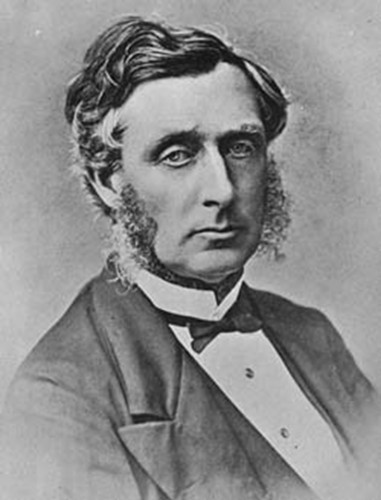
Thomas Sutcliffe Mort, portrait
Plate I T. S. Mort, c. 1860
Founder · Sydney · MDCCCXLIII

Thomas
Sutcliffe Mort.

23 December 1816 — 9 May 1878

Born at Willowfield in Bolton, Lancashire — second son of Jonathan and Mary Mort — Thomas was educated at Manchester Grammar School and apprenticed to the cotton firm of A. & S. Henry. When his father's affairs failed in 1834, the comfortable start he had expected vanished. At twenty-one he sailed for Sydney aboard the Superb, arriving in February 1838 with little beyond letters of introduction.

For five years he clerked at Aspinall, Browne & Co., trading colonial wool, hides and tallow — until that firm too collapsed in the financial crisis of 1843. With his employer ruined and the colony in depression, Mort took the only course left to him: he opened his own auction rooms, and held what is generally regarded as the first specialised public wool sale in Australia.

From that unpromising beginning came a career almost without parallel in colonial commerce. Within a decade he was Sydney's premier auctioneer; within two, his firm — by then Mort & Co. — had remade how the colony's defining staple was bought and sold.

"The greatest benefactor that the working classes in this country ever had." — Spoken at his funeral, May 1878
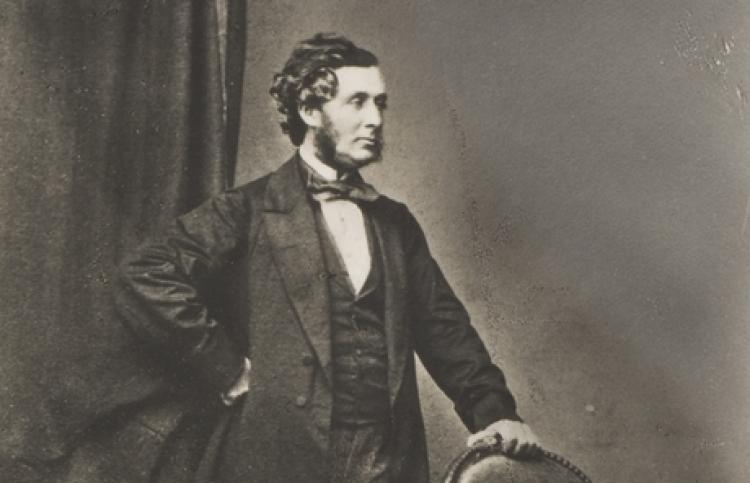
Thomas Sutcliffe Mort, full-length portrait
Plate II — Studio Portrait

Architect of a
colonial economy.

By the late 1850s Mort sat at the centre of an extraordinary web of colonial enterprise. He was a founding director of the Australian Mutual Provident Society in 1848 — known today as AMP — and a director of the Sydney Railway Company that built the colony's first line from Sydney to Parramatta. In 1852 he floated the Great Nugget Vein Mining Co., the first goldmining company registered in Australia. He helped finance Henry Parkes's Empire newspaper, sat on the Sydney Exchange, and held founding interests across sugar, cotton, silk, copper, coal, tin and steam navigation.

— Chapter I.

Mort's Dock,
Balmain.

In 1854 Mort laid the foundation stone of Sydney's first dry dock at Waterview Bay. It opened on the first day of 1855 — Australia's earliest completed dry dock, and for decades its largest. Under his sole ownership from 1866, the works grew to include iron and brass foundries, a patent slip and a full engineering shop. In 1870 it produced the first locomotive built in its entirety on Australian soil.

— Chapter II.

Bodalla, on the
south coast.

In 1860 Mort acquired more than thirteen thousand acres on the Tuross River and set about building a model rural settlement. He drained swamps, imported pasture grasses, established a township and engaged dairymen of European training. The estate's butter and cheese became renowned in Sydney, and Bodalla itself became a foundational chapter in the history of Australian dairying.

— Chapter III.

The dream of
cold.

From 1866 Mort funded the engineer Eugène Nicolle to develop mechanical refrigeration, intent on shipping Australian meat to England. He built freezing works in Darling Harbour and at Lithgow, chartered a steamer for the trade, and in 1875 declared at a public banquet that he had "solved the problem of the world's food supply." The first voyage failed — the metals would not bear the strain. He persevered until his death.

— 1843
First wool auction

Holds Australia's first specialised public wool sale.

— 1848
AMP Society

Founding director of the Australian Mutual Provident Society.

— 1852
First gold company

Floats the first registered goldmining company in the colony.

— 1855
Mort's Dock opens

Sydney's first dry dock — and Australia's first completed.

— 1860
Bodalla Estate

Pioneers commercial dairying on the south coast of NSW.

— 1872
Worker shares

Offers employees equity in Mort's Dock — radical for the era.

— 1875
Refrigeration banquet

Declares the export of frozen meat is at hand.

— 1883
The first statue

Sydney unveils the first public statue erected to any Australian.

In closing

What endures.

Mort married Theresa Laidley at St Lawrence's, Sydney, in 1841 — they had nine children together — and after her early death he married Marianne Macaulay in 1874. He kept two houses: Greenoaks, his Gothic-revival home at Darling Point, and the rural estate at Bodalla.

A devout Anglican, he was an unusually serious philanthropist for his era. He supported the Sydney Homœopathic Dispensary, opened the gardens of Greenoaks to the public, and treated his commercial ventures as much as community works as private enterprises. He died at Bodalla on 9 May 1878 — of pneumonia, contracted, by family account, while attending a sick employee in the night. He was buried at the Home Farm, in a spot he had chosen himself.

The southern Sydney suburb of Mortdale bears his name. Greenoaks was acquired in 1910 by the Anglican Diocese of Sydney and renamed Bishopscourt — the residence of the Archbishop ever since. The statue raised at Macquarie Place in 1883 — the first to honour any Australian — still stands.


The firm,
in its present form.

A private
holding company.

Goldsbrough Mort Pty Ltd today operates as a holding entity for the Mort family — a structure that has been refined through generations of trustees, advisers and family members working in concert.

The remit is intentionally narrow: to steward family capital across investment, operating businesses, and philanthropic commitments, with horizons measured in decades rather than quarters.

— I.

Capital stewardship

Long-duration allocation across listed, private and real-asset interests. Discipline over fashion; patience over noise.

— II.

Operating interests

Selective involvement in businesses where the family's experience and networks meaningfully compound returns.

— III.

Philanthropic legacy

Continuing causes carried forward through generations — community, country, and the institutions that shaped the family.

Carrying forward what was begun.

The Mort family has supported a range of charitable, civic and cultural causes since the nineteenth century. Today this work continues through structured giving and direct involvement — quietly, and without expectation of recognition.

Explore charitable interests